
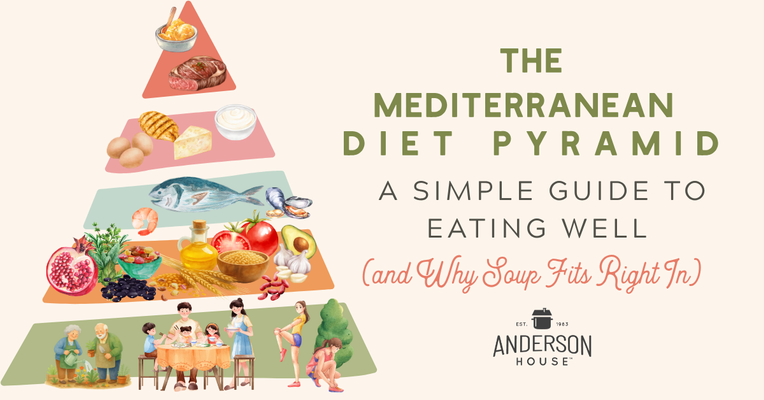
The Mediterranean Diet Pyramid: A Simple Guide to Eating Well (and Why Soup Fits Right In)
Posted by Nicola Prybell on Jul 14th 2026
For decades, the Mediterranean diet has consistently ranked among the healthiest eating patterns in the world. Rather than focusing on restrictive rules or counting calories, it encourages enjoying wholesome, flavorful foods like vegetables, beans, whole grains, olive oil, herbs, and lean proteins while making meals something to savor with family and friends.
Research has linked Mediterranean-style eating with numerous health benefits, including supporting heart health, helping maintain healthy blood sugar levels, and promoting overall wellness when combined with regular physical activity and other healthy lifestyle habits.
The best part? It's not about perfection. It's about building balanced meals with nourishing ingredients you already know and love.
What Is the Mediterranean Diet?
Despite its name, the Mediterranean diet isn't a strict diet at all. Instead, it's a pattern of eating inspired by the traditional cuisines of countries bordering the Mediterranean Sea, including Greece, Italy, and parts of Spain.
Instead of eliminating food groups, it emphasizes eating more of certain foods while enjoying others in moderation.
Common foods include:
- Fresh vegetables and fruits
- Beans, lentils, and other legumes
- Whole grains
- Nuts and seeds
- Olive oil as the primary cooking fat
- Fish and seafood several times per week
- Moderate amounts of dairy like yogurt and cheese
- Poultry more often than red meat
- Herbs and spices for flavor instead of excess salt
- Plenty of water throughout the day
Many people also appreciate that the Mediterranean lifestyle encourages cooking at home, eating mindfully, sharing meals with loved ones, and staying physically active.
The Mediterranean Diet Food Pyramid
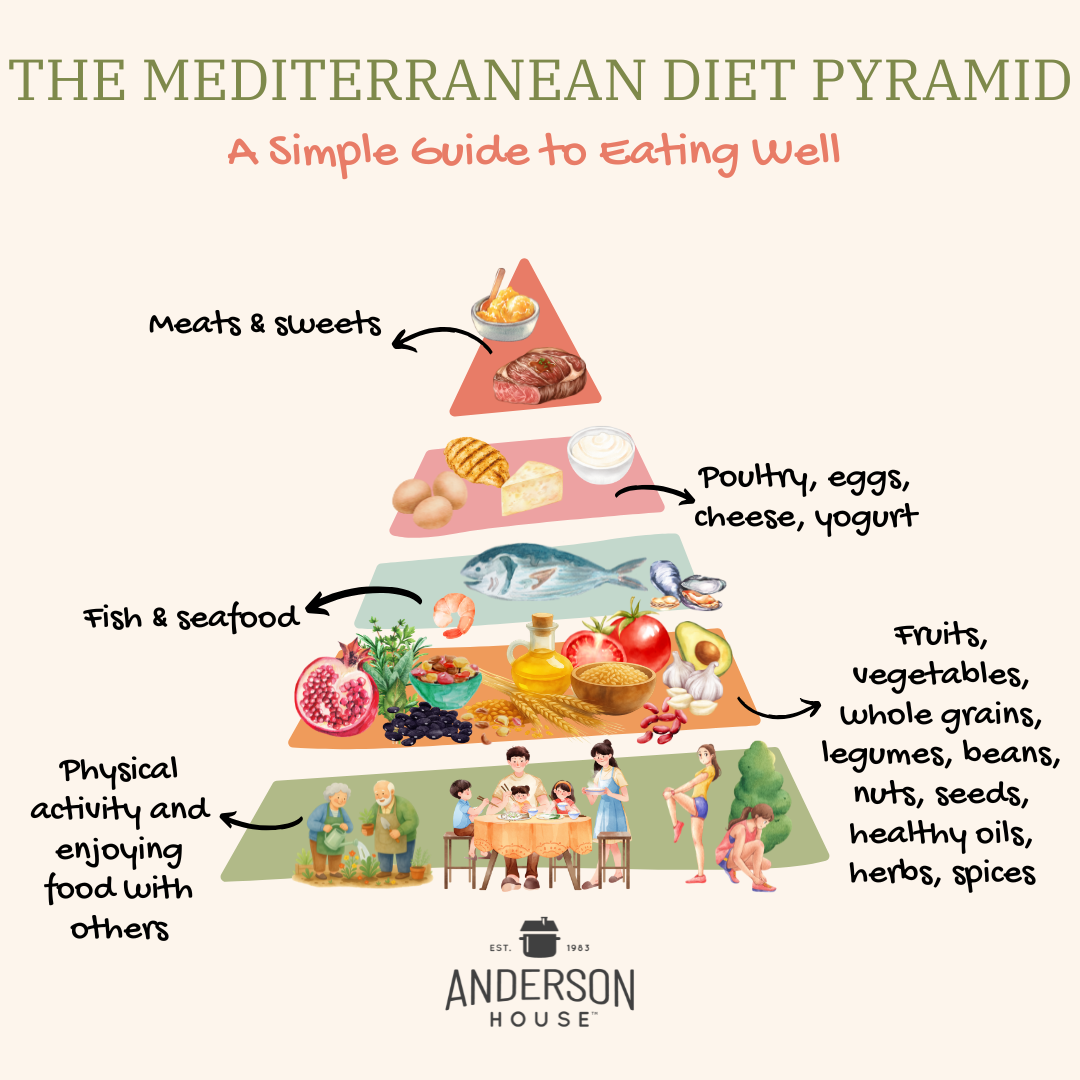
Unlike many traditional food pyramids, the Mediterranean Diet Pyramid emphasizes both what you eat and how you eat. Daily movement, enjoying meals with others, cooking from scratch, and choosing minimally processed foods are all considered part of the lifestyle.
At the foundation of the pyramid are plant-based foods including vegetables, beans, fruits, whole grains, nuts, and legumes. These foods provide fiber, vitamins, minerals, and lasting satisfaction.
Why Soup Naturally Fits a Mediterranean Lifestyle
Soup is one of the easiest ways to enjoy many of the foods that make the Mediterranean diet so appealing.
A single bowl can include:
- Fiber-rich beans and lentils
- Colorful vegetables
- Whole grains
- Herbs and spices
- Lean proteins
- Healthy fats added with a drizzle of olive oil or a handful of nuts
Homemade soups also make meal planning simple, encourage portion balance, and are an easy way to increase vegetable and legume intake throughout the week.
Many Frontier Soups products feature ingredients commonly associated with Mediterranean-style eating, making it easy to enjoy comforting homemade meals built around pantry staples.
Frontier Soups to Enjoy with a Mediterranean-Inspired Meal
If you're looking for simple ways to incorporate more beans, grains, and vegetables into your weekly meals, these Frontier favorites are a great place to start.
Minnesota Heartland Eleven Bean Soup
Packed with a colorful blend of beans, this hearty soup is naturally rich in plant-based protein and fiber. Add extra vegetables or finish with a drizzle of olive oil for a Mediterranean-inspired twist.

Minnesota Heartland Eleven Bean Soup
This soup is a beautiful medley of eleven beans, peas, and lentils, full of flavor, texture, and old-fashioned goodness. Simmer it slow and low with kielbasa sausage and chicken for a rich, satisfying meal that serves a crowd. Perfect for Sunday suppers, winter nights, or any time you’re craving true homemade comfort.
See This Soup →Black Bean Soup
Black beans are a nutritional powerhouse, providing protein, fiber, iron, and important minerals. Serve with avocado, fresh cilantro, or diced tomatoes for additional flavor and texture.

Texas Wrangler Black Bean Soup
Inspired by the hardworking spirit of the Texas range, this meatless marvel gets an extra kick when you stir in purple onion and a splash of orange juice—a surprising duo that adds sweet tang and depth to every spoonful. Whether you’re feeding the family or cozying up solo, this soup is pure comfort in a bowl.
See This Soup →Lentil Soup
Lentils have long been a staple throughout Mediterranean cuisine. They're satisfying, affordable, and cook beautifully into hearty soups that pair perfectly with fresh herbs and whole grain bread.

Spiced & Sweet Butternut Squash & Lentil Soup
This hearty soup combines red lentils with a gentle blend of warm spices, creating a comforting, mildly sweet base that’s perfect for sweater weather.
See This Soup →Whole Grain & Bean Soups
Soups featuring whole grains alongside beans provide satisfying texture while helping create balanced meals that keep you feeling full longer.

Vermont Farmhouse Apple, Sausage & Bean Soup
Inspired by crisp autumn days and the comforting aroma drifting from country kitchens, our Vermont Farmhouse Apple, Sausage & Bean Soup brings a bit of New England warmth to your table. This unique soup is a rustic blend of colorful legumes and aromatic seasonings, lightly touched with curry for depth and balance.
See This Soup →Easy Mediterranean Meal Ideas
A Mediterranean-inspired dinner doesn't need to be complicated.
Try pairing your favorite Frontier soup with:
- A simple green salad dressed with olive oil and lemon
- Whole grain bread or crusty artisan bread
- Fresh fruit for dessert
- Roasted vegetables
- A sprinkle of fresh herbs
- Greek yogurt topped with cucumber and dill
These simple additions create satisfying meals using ingredients you may already have on hand.
Tips for Getting Started
You don't have to change your entire diet overnight.
Start with a few simple habits:
- Add beans or lentils to your meals more often.
- Fill half your plate with vegetables whenever possible.
- Choose whole grains over refined grains when practical.
- Cook more meals at home.
- Use herbs and spices to add flavor.
- Replace butter with olive oil in many recipes.
- Enjoy fish regularly if it fits your dietary preferences.
- Make soup part of your weekly meal plan.
Small, sustainable changes often have the greatest long-term impact.
More Than a Diet
One reason the Mediterranean diet has remained so popular is that it focuses on overall lifestyle rather than strict food rules.
The Mediterranean approach encourages:
- Cooking and eating at home
- Sharing meals with family and friends
- Enjoying seasonal ingredients
- Eating slowly and mindfully
- Staying physically active
- Finding balance rather than striving for perfection
Those habits can make healthy eating feel more enjoyable and sustainable over time.
Frequently Asked Questions
Is the Mediterranean diet vegetarian?
Not necessarily. While plant-based foods form the foundation of the diet, fish, poultry, dairy, and small amounts of red meat can all be included.
Can soup be part of the Mediterranean diet?
Absolutely. Soups made with beans, vegetables, whole grains, herbs, and lean proteins fit naturally into Mediterranean-style eating.
Is olive oil important?
Yes. Olive oil is traditionally the primary source of added fat in Mediterranean cooking and is commonly used in dressings, marinades, and cooking.
Does the Mediterranean diet include wine?
Some traditional Mediterranean eating patterns include moderate wine consumption with meals. However, current health guidance does not recommend starting to drink alcohol for health benefits. The Mediterranean diet can be enjoyed with or without alcohol.
Explore More Better-For-You Favorites
Looking for more wholesome meal inspiration?
Browse our Better-For-You Collection, explore our hearty bean soups, and discover comforting recipes made with simple pantry ingredients that make homemade meals easy any night of the week.
Medical Disclaimer
This article is intended for informational purposes only and should not be considered medical or nutritional advice. Nutrition needs vary from person to person. Always consult your physician or a registered dietitian before making significant dietary changes, especially if you have underlying health conditions, food allergies, or specific nutritional needs.