4 Low-Sodium Stock and Broth Recipes for a Healthy Soup Base
Posted by Eunice Juanzo on Jun 1st 2023
Updated July 15, 2026
When a soup tastes incredible, it almost always starts with one thing: a great broth.
Whether you're making chicken noodle soup, vegetable soup, chili, or a hearty bean soup, the broth or stock you choose creates the foundation for every other flavor in the pot.
If you're trying to reduce sodium in your diet, making your own low-sodium broth is one of the easiest ways to enjoy homemade soup while controlling exactly what goes into it.
The best part? It's surprisingly simple.
Why Choose Low-Sodium Broth?
Many store-bought broths contain hundreds of milligrams of sodium per serving. While they're convenient, the sodium can add up quickly, especially if you're making a large pot of soup.
Making your own broth lets you:
- Control the sodium level
- Skip preservatives and artificial ingredients
- Customize herbs and seasonings
- Reduce food waste
- Build richer homemade flavor
Because Frontier Soup mixes never contain added salt, starting with a low-sodium broth gives you complete control over the final seasoning.
Instead of beginning with a salty base, you can season to taste at the end of cooking.
Broth vs. Stock: What's the Difference?
People often use the terms interchangeably, but they're slightly different.
| Broth | Stock |
|---|---|
| Usually made with meat and vegetables | Usually made with bones |
| Lighter flavor | Richer body from collagen |
| Ready to sip | Best used as a cooking base |
Both work beautifully in homemade soup.
Is Homemade Broth Healthier?
Homemade broth isn't automatically healthier, but it does give you more control.
When making broth at home you can:
- Leave out excess salt
- Skip preservatives
- Use fresh vegetables
- Choose lean proteins
- Freeze portions for future meals
Many home cooks also enjoy using vegetable scraps and leftover chicken bones that might otherwise go to waste.
1. Pressure Cooker Chicken Stock
Recipe from Frontier Soups founder Trisha Anderson
This homemade chicken stock is perfect when you want to make the most of a leftover roasted chicken. It’s rich, nourishing, and the pressure cooker helps you get deep flavor in less time.
Ingredients:
-
1 whole roasted chicken (meat removed, bones reserved)
-
1 whole onion, quartered (no need to peel)
-
2 celery ribs
-
1 medium carrot
-
5 peppercorns
-
1 Tbsp apple cider vinegar or lemon juice
-
Optional herbs (thyme, parsley, bay leaf)
Instructions:
-
Quarter the onion and clean the celery and carrot. No need to peel the vegetables—just be sure they’re well washed.
-
Place all the ingredients in the bowl of your pressure cooker. Add enough water to fully cover the bones (about 12 cups works well). If using apple cider vinegar or lemon juice, add it now to help pull extra nutrients from the bones.
-
Keep the seasonings simple with a few peppercorns, or add herbs like thyme, bay leaves, or parsley to suit your preferences. Trisha prefers a basic base stock and adds flavor later, depending on the soup she’s making.
-
Set your pressure cooker to cook for 1 hour at high pressure.
-
Once the cooking time is complete, you can either let the pressure release naturally or perform a quick release.
-
Carefully pour the hot broth through a sieve into a large bowl. Let it cool slightly, then cover and refrigerate for at least 3 hours—or preferably overnight. Discard the used bones and vegetables.
-
Once chilled, skim the solidified fat from the surface of the broth using a spoon. Remove as much or as little fat as you like, based on your preference.
-
And that’s it! You now have a rich, homemade chicken stock ready to use. Store it in airtight containers in the refrigerator if you'll use it soon, or freeze for longer-term storage.
Tip: Freeze the finished stock in one- or two-cup containers so it's ready whenever you're making soup.
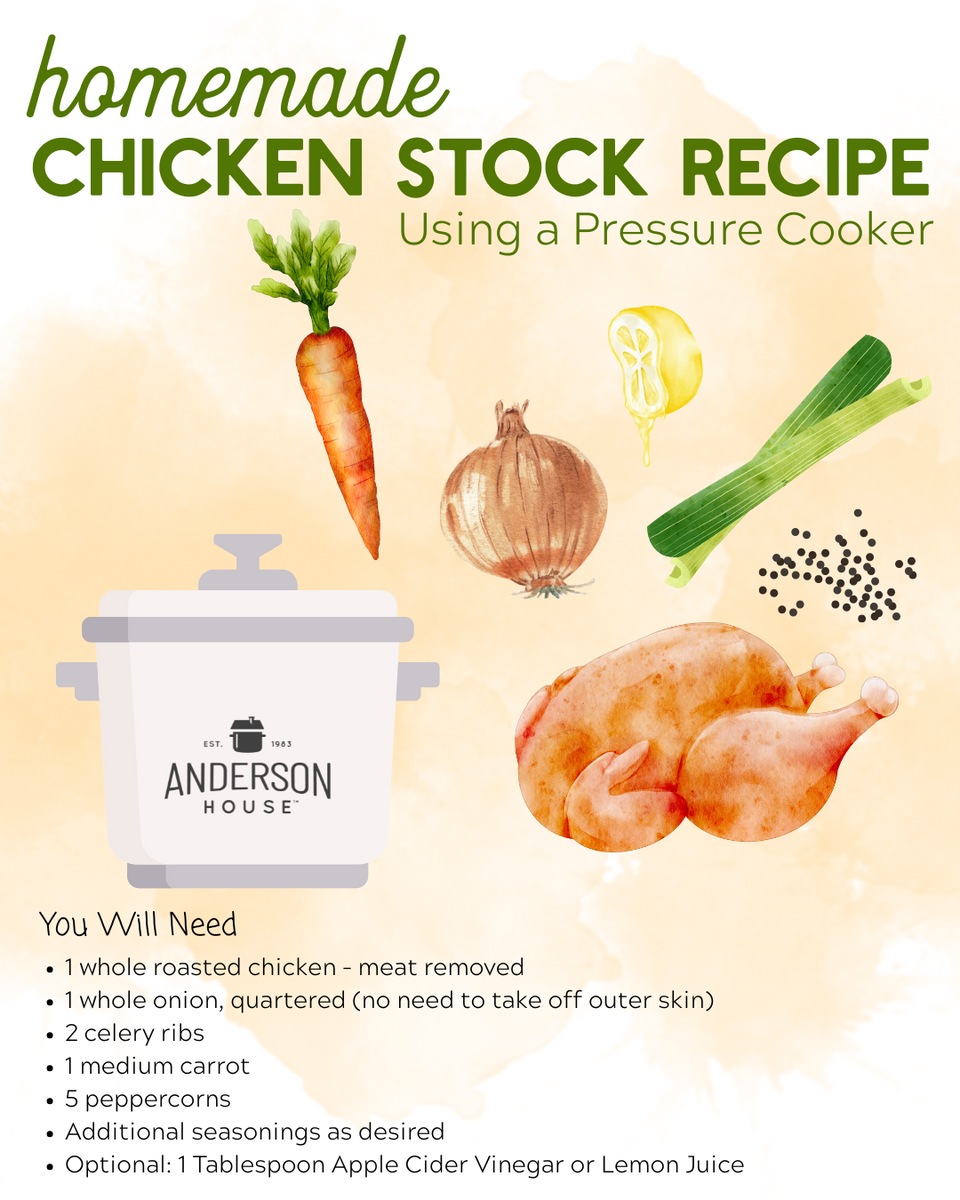
2. Roasted Chicken Stock
Sue Rozema's Recipe
Before simmering the bones, roasting them first creates deeper flavor and a richer color.
Ingredients:
-
Leftover chicken bones (meat removed)
-
Leftover vegetables of your choosing
-
1 onion, chopped
Instructions:
-
Roast the bones and veggies at 350°F for 1 hour.
-
Transfer to a pot and add chopped onion. Cover with water.
-
Simmer covered for 1 hour.
-
Strain through a fine mesh sieve. Discard solids.
-
Cool and skim fat. Use right away or freeze for later.
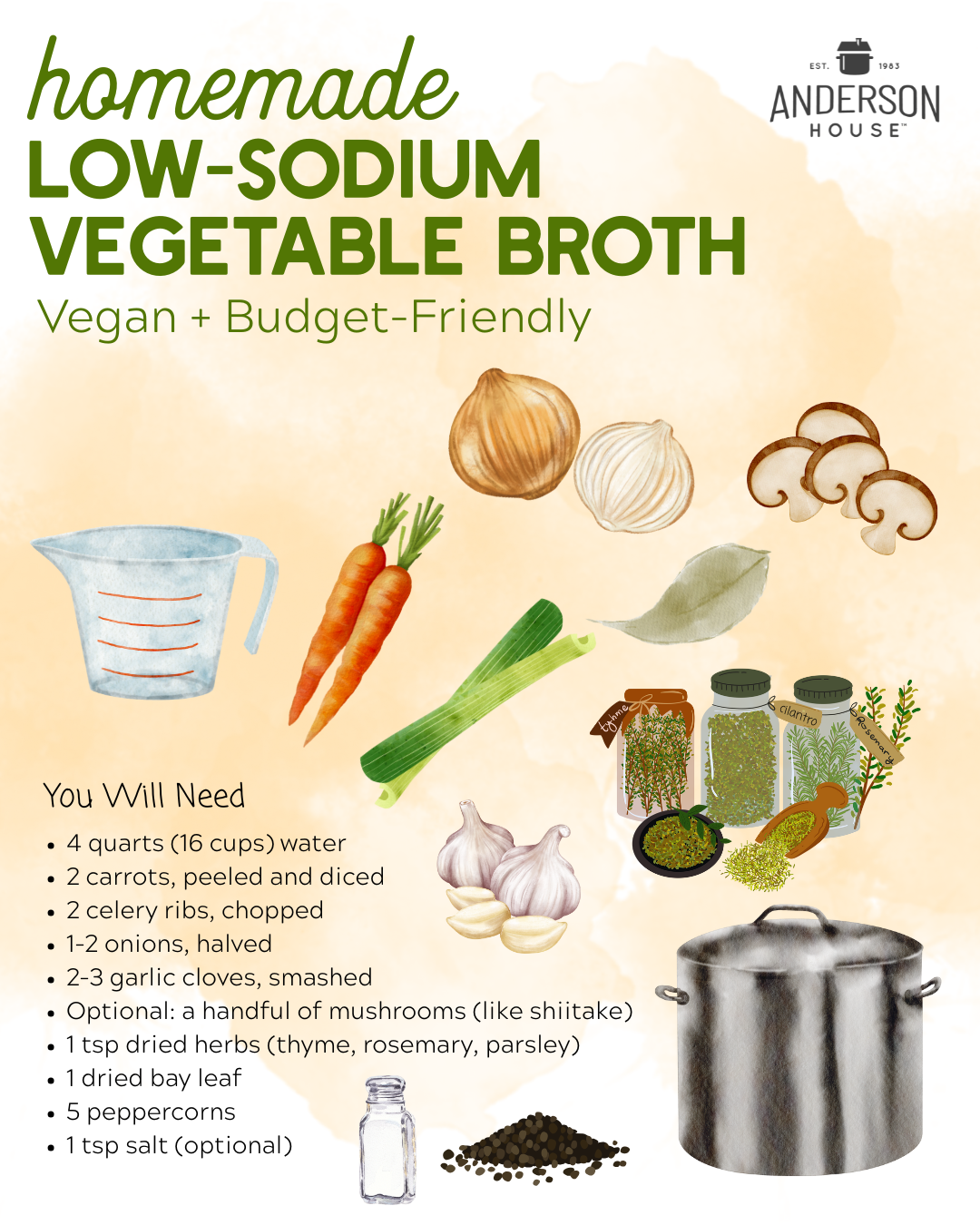
3. Homemade Low-Sodium Vegetable Broth
This naturally vegan broth is one of the easiest recipes to customize.
Use vegetables like:
- carrots
- celery
- onions
- mushrooms
- garlic
- parsley stems
- thyme
Avoid heavily bitter vegetables like broccoli or cabbage, which can overpower the broth.
Ingredients:
-
4 quarts (16 cups) water
-
2 carrots, peeled and diced
-
2 celery ribs, chopped
-
1–2 onions, halved
-
2–3 garlic cloves, smashed
-
Optional: a handful of mushrooms (like shiitake)
-
1 tsp dried herbs (thyme, rosemary, parsley)
-
1 dried bay leaf
-
5 peppercorns
-
1 tsp salt (optional)
Instructions:
-
Add everything to a large pot. Add water until ingredients are submerged.
-
Bring to a boil uncovered, then reduce heat and gently boil for 1 hour.
-
Strain and discard solids. Store in jars or freeze for later.
Rich Beef Stock
Inspired by Filipino cooking traditions
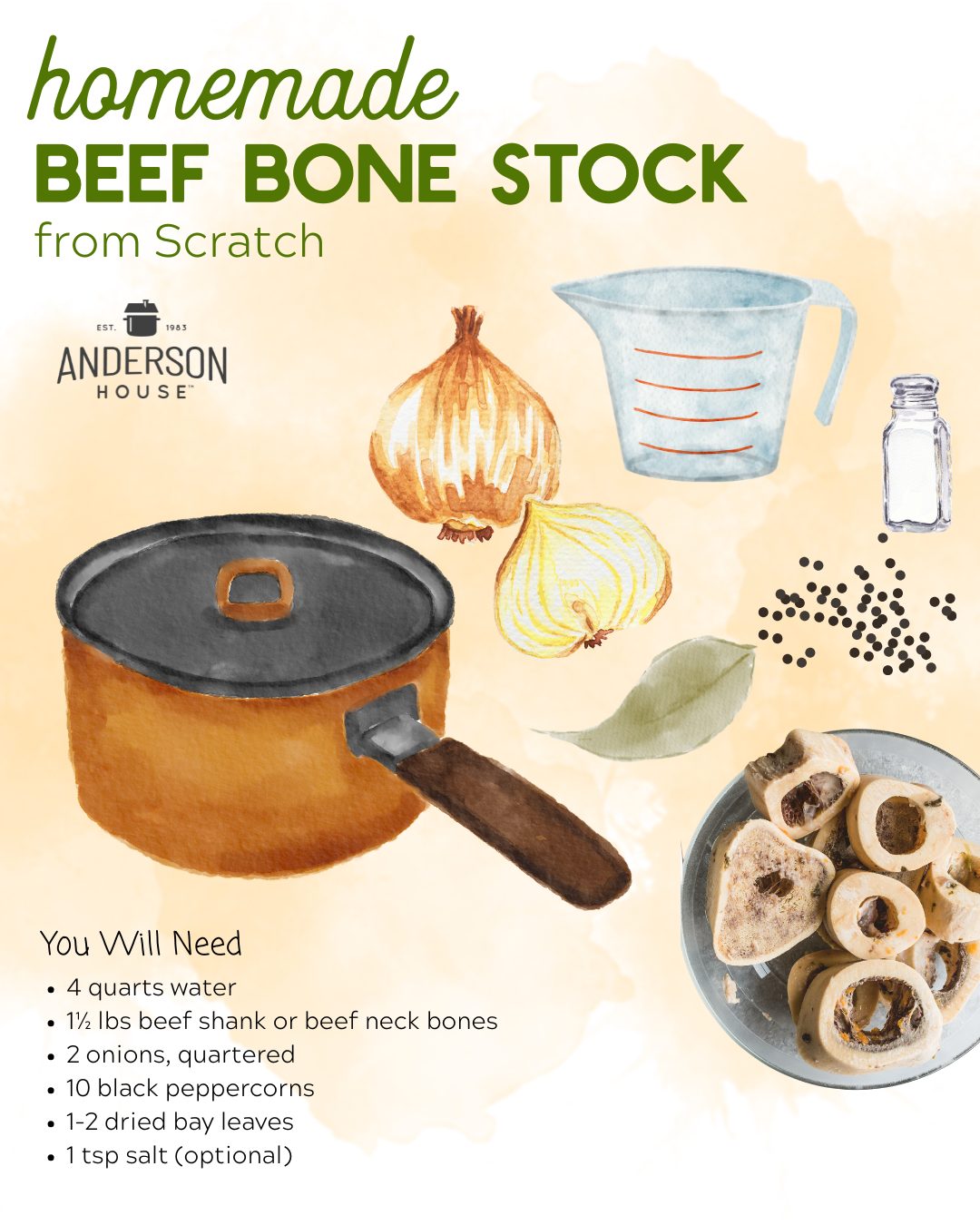
This one is a personal favorite! I make beef stock often when cooking traditional Filipino dishes. It’s deeply savory and satisfying. The key? Beef bones like shank or neck, and a long simmer.
Ingredients:
-
4 quarts water
-
1½ lbs beef shank or beef neck bones
-
2 onions, quartered
-
10 black peppercorns
-
1–2 dried bay leaves
-
1 tsp salt (optional)
Instructions:
-
Rinse bones. Place in a pot with cold water and bring to boil for 20 mins. Discard water.
-
Return bones to pot. Add fresh cold water and remaining ingredients.
-
Bring to a gentle boil, then lower heat to a simmer.
-
Skim the film off the top as it simmers.
-
Simmer 2–4 hours. Strain and store.
Long simmering helps extract collagen and creates a flavorful stock that's perfect for hearty soups and stews.
Tips for Making Better Homemade Broth
Don't oversalt.
It's much easier to add salt later than remove it.
Save vegetable scraps.
Carrot peels, celery leaves, onion ends, parsley stems, and mushroom stems all add flavor.
Freeze leftovers.
Homemade broth freezes beautifully for several months.
Simmer, don't boil.
A gentle simmer produces a clearer, cleaner-tasting broth than a rolling boil.
? (Natural internal link opportunity to your "Simmer vs. Boil" article.)
Best Frontier Soups to Pair with Homemade Broth

Connecticut Cottage Chicken Noodle Soup
Perfect with homemade chicken stock.
SHOP THIS SOUP →
Rocky Mountain Trail Loaded Potato Soup
Rich chicken stock makes this extra creamy and flavorful.
SHOP THIS SOUP →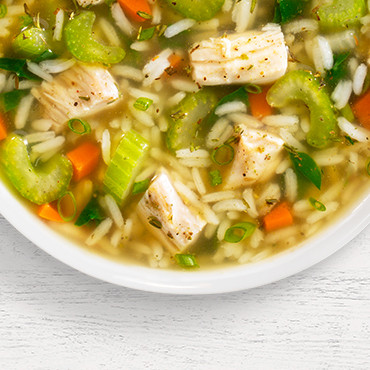
Kentucky Homestead Chicken & Rice Soup
Pairs beautifully with homemade chicken broth.
SHOP THIS SOUP →Frequently Asked Questions
What is the lowest sodium broth?
Homemade broth is often the lowest-sodium option because you control exactly how much salt is added.
Can I make broth without salt?
Absolutely. Herbs, vegetables, garlic, onions, mushrooms, and bones provide plenty of flavor on their own.
What's the difference between low-sodium and no-salt-added broth?
Low-sodium broth contains a reduced amount of sodium, while no-salt-added broth has no salt added during cooking. Some sodium may still occur naturally in the ingredients.
Can homemade broth be frozen?
Yes. Let it cool completely before freezing in airtight containers. Most homemade broth keeps well for several months in the freezer.
Final Thoughts
A delicious soup starts long before the first vegetables or beans go into the pot. Choosing a flavorful homemade broth gives you complete control over the taste, nutrition, and sodium level of your meal.
Whether you make chicken stock from leftover bones, simmer vegetables into a light broth, or prepare a rich beef stock for hearty stews, a homemade soup base is one of the easiest ways to elevate your cooking.
And because Frontier Soup mixes are made without added salt or preservatives, pairing them with homemade low-sodium broth lets you create comforting, homemade meals that fit your family's tastes and dietary preferences.