Safe Soup Storage: Cooling, Refrigeration & Freezing Tips You Need to Know
Posted by Nicola Prybell on Nov 26th 2025
When you make one of our soups, it’s natural to want to enjoy it over a few meals. But exactly how long is it safe to keep soup in the fridge? The answer depends on what’s in the soup, how fast you cooled it, and whether it was stored properly. This post walks through what food-safety experts recommend — and how you can store, reheat, or freeze soup most safely.
What the Experts Say: A Baseline for Soups & Leftovers
-
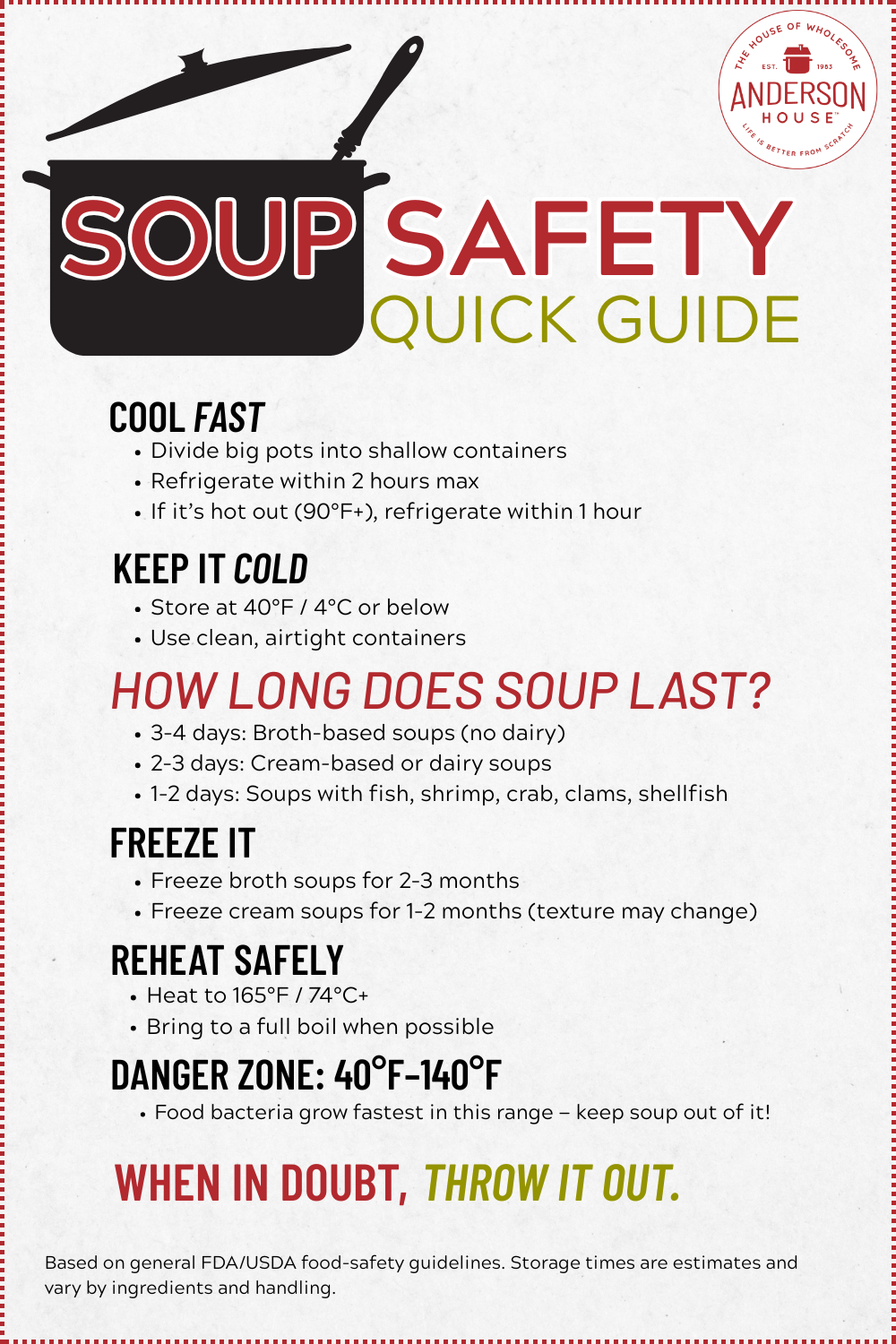
According to the FDA/USDA cold-storage guidelines, soups and stews (with vegetables or meat added) should be refrigerated at 40 °F (4 °C) or below and used within 3 to 4 days for safety. foodsaftey.gov
-
Leftovers in general — including soups — should not stay unrefrigerated longer than two hours (or one hour when the ambient temperature is above 90 °F). fda.gov
-
A big pot of hot soup takes a long time to cool; dividing it into smaller portions and using shallow containers helps it chill quickly and stay out of the “danger zone.” usda.gov
These guidelines form the basis for the conservative shelf-life recommendations below — but every batch is different, so always check before eating.
Refrigerator Storage: Suggested Shelf-Life by Soup Type
| Type of Soup | Suggested Refrigerator Shelf-Life* |
|---|---|
| Broth-based soups (vegetable, chicken, beef, etc.; no dairy) | Up to 3–4 days |
| Cream-based soups (milk, cream, cheese, half-and-half, dairy-thickened) | 2–3 days (use within 48–72 hours for best safety) |
| Soups with seafood (fish, shrimp, crab, shellfish — broth or cream-based) | 1–2 days (1 day is safest for cream/seafood combos) |
*Assumes soup was cooled quickly, stored in airtight containers, and kept at ≤ 40 °F (4 °C).
Why the difference?
-
Dairy (milk, cream, cheese) and shellfish/fish provide rich environments for bacteria — especially if cooling or storage are mishandled.
-
Cream/dairy adds risk because pathogens tolerated in plain broth may multiply faster in dairy-based soups.
Best Practices for Safe Soup Storage
-
Cool quickly. Once cooking is finished, try to get the soup from cooking temperature down to 70–90 °F within two hours — preferably sooner. Large pots chill slowly; transferring soup into smaller, shallow containers helps immensely. usda.gov
-
Use airtight containers. Prevent contamination, odors, or drying out.
-
Refrigerate at < 40 °F (4 °C). Use a fridge thermometer to confirm. usda.gov
-
Label and date your soup containers. Helps you track age and avoid “mystery leftovers.”
-
Inspect before reheating/eating. Discard if there’s an off smell, mold, sliminess, or unexpected appearance or texture — even if it hasn’t reached the “expiry” day.
-
Reheat thoroughly. Bring to a rolling boil (or at least 165 °F / 74 °C) to kill potential bacteria. marthastewart.com
Freezing Soups — When You Want to Save Longer
If you won’t finish the soup within the recommended fridge window, freezing is a good option:
-
Broth-based soups: freeze for up to 2–3 months for best quality. After that, flavor and texture may degrade — though frozen foods stored at 0 °F (-18 °C) remain safe indefinitely. scph.org
-
Cream-based soups: freezing often degrades texture (dairy can separate, become grainy). For best results, consider freezing before adding dairy, then add cream/milk at reheating time. Many food-safety and cooking guides suggest cream soups are better eaten fresh.
If freezing, leave a little space at the top of containers (liquid expands when frozen), and label them with date & contents.
Why “When in Doubt — Throw It Out” is the Safest Rule
-
Temperature abuse (sitting too long at room temperature before refrigerating) dramatically increases risk. The “danger zone” is roughly 40 °F to 140 °F — when foods remain in that range for too long, bacteria can multiply rapidly. usda.gov
-
Spoilage isn’t always obvious. Relying only on smell or appearance isn’t foolproof; microorganisms that cause foodborne illness don’t always make food look or smell “bad.” Using the time-based guidelines plus safe handling reduces risk greatly.
-
Because soups — especially cream- and seafood-based — may support faster bacterial growth than plain broth, giving broader “eat-within” advice can lead to unsafe consumption. Our conservative recommendations aim to minimize risk.
Final Thoughts
Soups are wonderful for batch cooking — but keeping them safe means being mindful about how fast you cool them, how you store them, and how long you keep them. Use the guidelines above to help decide when to eat, freeze, or toss. If you’re ever uncertain — especially with cream- or seafood-based soups — err on the side of caution. And for the highest-risk scenarios (for example, soups served to elderly people, young children, pregnant folks, or immunocompromised individuals) consider treating them as perishable as a raw meat dish: eat within 24 hours or freeze immediately.
Stay safe… and enjoy your soup.
(Pin this and save it for later!)